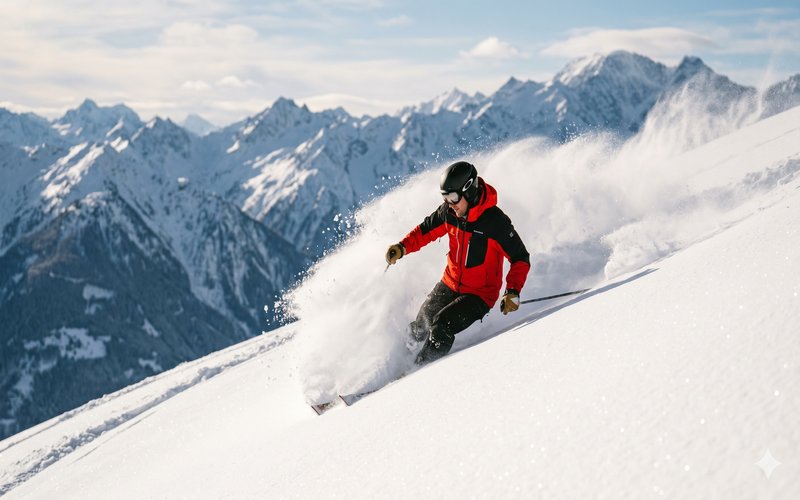
Off-Piste Skiing Insurance
Venture beyond the boundary markers — with the right insurance
Key Risks
- ⚠Avalanche exposure
- ⚠Unpatrolled terrain with no immediate rescue
- ⚠Variable and unpredictable snow conditions
- ⚠Remote location
- ⚠Crevasse risk in glacial terrain
What Insurance Covers
- ✓Emergency rescue (with appropriate policy)
- ✓Medical treatment
- ✓Helicopter evacuation
- ✓Search and rescue costs
💡 Insurance Tip
Always ski off-piste with a qualified mountain guide, carry an avalanche transceiver (beacon), and ensure your policy explicitly states off-piste is covered. Many policies only cover off-piste when accompanied by a guide.
Off-piste skiing — skiing on unmarked, ungroomed terrain outside the designated boundaries of a ski resort — offers a different dimension of winter sports adventure. Fresh powder fields, dramatic mountain scenery, and the challenge of variable natural terrain attract intermediate to advanced skiers who want to explore beyond what groomed pistes can offer.
But off-piste terrain is fundamentally different from resort skiing in ways that have profound implications for insurance. The risks are higher, rescue is harder, and the cost of getting it wrong is much greater.
What "Off-Piste" Means for Insurance
Insurance providers draw a clear distinction between: 1. **On-piste**: Groomed, marked runs within resort boundaries, regularly patrolled 2. **Off-piste within resort boundaries**: Ungroomed terrain within the resort area but outside marked runs 3. **Off-piste outside resort boundaries**: Backcountry terrain beyond resort borders
Most standard snow sports add-ons cover only category 1. Some specifically exclude all off-piste skiing, while others may include limited off-piste within resort boundaries but exclude backcountry terrain outside resort borders.
The Avalanche Risk
Avalanche risk is the defining hazard of off-piste skiing. New Zealand's Southern Alps, and international destinations like the French Alps, Swiss mountains, and Japanese backcountry, all have significant avalanche terrain. An avalanche rescue operation requires specialised equipment, trained personnel, and often helicopter support — costs that can run to tens of thousands of dollars.
Essential Safety Equipment
Any off-piste skier should carry: - Avalanche transceiver (beacon) - Probe pole - Avalanche shovel - First aid kit
Some insurers require evidence of carrying appropriate safety equipment as a condition of cover. Check your policy requirements before heading off-piste.
NZ Off-Piste Terrain
New Zealand's ski resorts offer varying levels of off-piste access: - **Treble Cone** (Wanaka): Extensive off-piste terrain with dramatic drops - **The Remarkables**: Defined off-piste zones accessible by guided tours - **Cardrona**: Limited but available off-piste zones
For serious off-piste skiing in New Zealand, the Harris Mountains and Mount Aspiring National Park offer world-class terrain — but require guided operations and heli-ski access.
Common Exclusions
- ✗Off-piste without qualified guide (many policies)
- ✗Closed or restricted areas
- ✗Standard Snow Sports add-on (explicitly excludes off-piste)